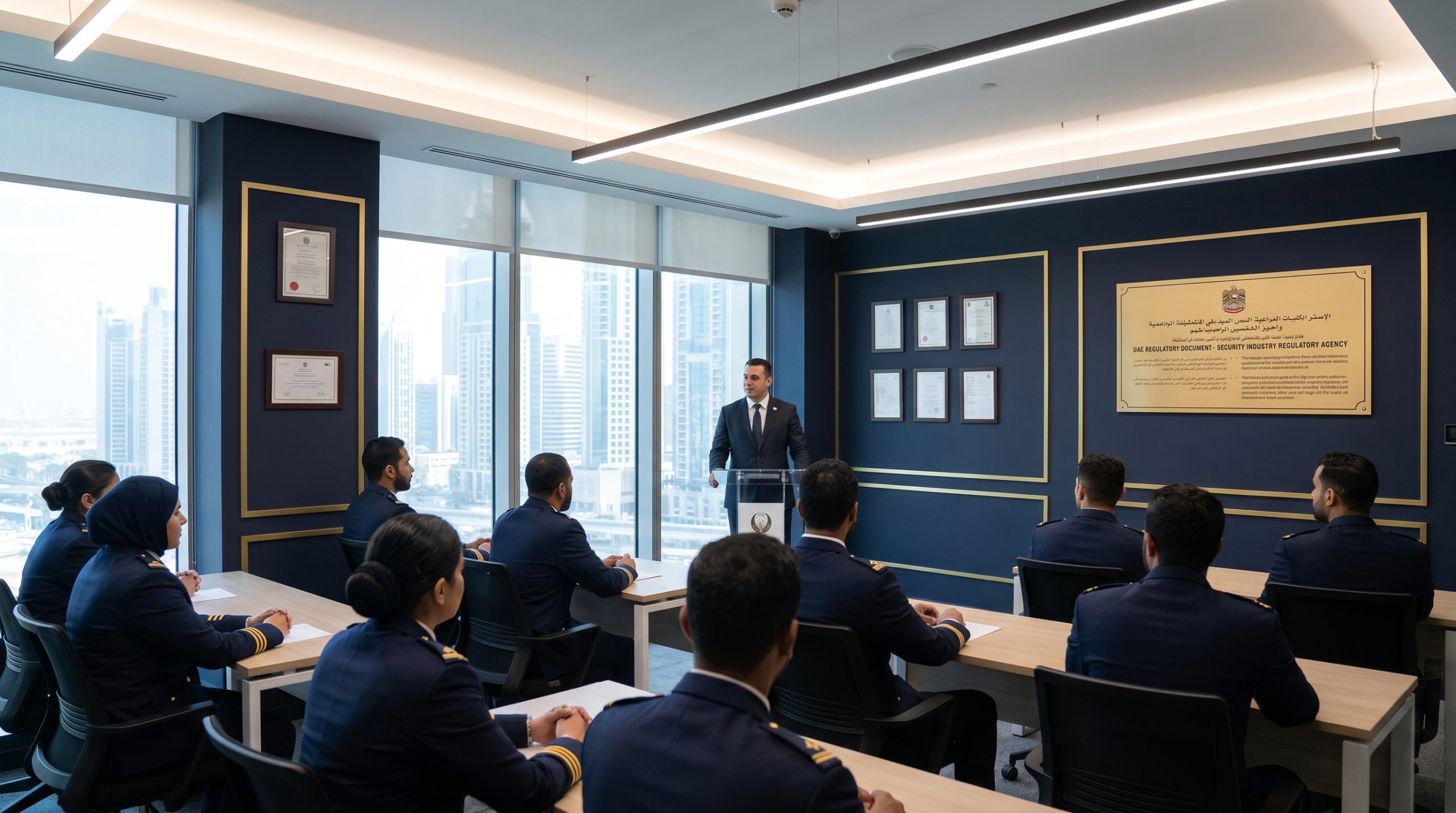
The SIRA training centre system is one of the most misunderstood parts of entering the UAE security industry. Candidates arrive unprepared, fail practical assessments, and lose weeks waiting for rebooking slots. This guide covers exactly what happens at an accredited SIRA training centre in Dubai, how the curriculum is structured, and what preparation gives you the best chance of clearing on the first attempt.
What’s a SIRA Training Centre?
SIRA – the Security Industry Regulatory Agency – licenses and oversees every security professional operating in Dubai. Part of that oversight means controlling who delivers training. A SIRA training centre is an accredited facility that has met the agency’s instructor standards, curriculum requirements, and examination protocols.
Not all security training companies in Dubai are SIRA-accredited. Operating as a security guard without passing through an approved SIRA training centre is a violation that results in permit denial and potential employer penalties. Candidates should verify accreditation status directly with SIRA before committing to any programme.
Who Must Attend a SIRA Training Centre
The requirement covers several categories of security professionals:
- Security guards seeking their initial Dubai work permit and PSBD card
- Supervisors and team leaders seeking an upgraded licence category
- Security consultants applying for consultancy licences
- Foreign nationals with prior security experience who need UAE regulatory alignment
UAE nationals with previous SIRA certification may qualify for exempted pathways, but most entrants – whether arriving from overseas or transitioning from another sector within the UAE – will need to complete the full programme.
SIRA Training Curriculum: What the Programme Covers
Security Fundamentals and UAE Law
The opening module covers the legal system that governs private security in the UAE. This includes the federal law that established SIRA, the specific obligations of licence holders, and the limits of authority that security personnel may exercise.
This section matters. Gulf security candidates occasionally arrive with experience from jurisdictions where guards have wider enforcement powers. UAE law is specific – knowing where your authority ends is tested directly.
Physical Security Procedures
Candidates learn access control protocols, checkpoint management, perimeter inspection methodology, and documentation standards. Assessment in this area is practical, not purely written. Expect to demonstrate procedures rather than just describe them.
Emergency Response and First Aid
The programme includes a first aid component that leads to certification. Coverage includes CPR, AED operation, bleeding control, and emergency escalation protocols. This component has a practical assessment that requires hands-on demonstration.
Fire Safety and Evacuation
Instructors cover fire detection systems, extinguisher selection, and evacuation coordination. Dubai has specific building code requirements that inform some of this content – candidates shouldn’t assume their prior country experience maps directly.
Report Writing and Communication
Professional documentation is a core competency for SIRA. Incident reports are tested, and written communication standards are assessed. Candidates whose first language isn’t English should prepare for this component specifically.
Counter-Terrorism Awareness (CT Module)
SIRA-approved programmes include a counter-terrorism awareness component aligned with UAE national security priorities. The focus is on hostile vehicle mitigation awareness, lone actor recognition, and the “run-hide-tell” protocol adapted for Gulf environments.
The Assessment Structure
SIRA training centre assessments consist of written examinations and practical components. The written exam covers law, procedures, and emergency response theory. Practical elements assess physical drills, first aid demonstrations, and report quality.
Minimum pass marks vary by module. Failing a single component doesn’t automatically fail the full programme, but candidates must reach the required threshold on each module independently. Partial resits are possible, but they extend your timeline and rebooking is subject to centre availability.
Timeline: How Long Does SIRA Training Take?
Standard SIRA training programmes run between five and ten working days depending on the centre and the licence category being pursued. Supervisor and management-level programmes are longer than basic guard licences.
After completion, documentation is submitted to SIRA for licence issuance. Current processing times run approximately two to four weeks from submission. Factor this into any employment start dates – employers who need a guard on-site before the licence clears are taking a compliance risk.
How to Prepare Before You Attend
Study UAE Security Law Before Day One
The legal module catches underprepared candidates. Review the relevant UAE federal decrees governing private security before the programme begins. SIRA publishes regulatory information on its official portal – use it.
Practise Written English
Report writing assessments trip up candidates who can perform the physical job competently but struggle to produce clear written documentation. If English isn’t your primary language, spend time writing incident report practice scenarios in advance.
Physical Readiness
SIRA training isn’t a fitness course, but practical drills require basic physical capability. If you’ve been sedentary, a few weeks of light conditioning before the programme is worth the effort.
Prepare Your Documents
Training centres require specific documentation on arrival. This typically includes your passport, Emirates ID (or visa documentation if you’re new in-country), your sponsor’s trade licence, and any prior security certificates if claiming exemptions. Arriving without the correct documents causes delays and may cost you your slot.
Choosing the Right SIRA Training Centre Dubai
All accredited centres must meet SIRA’s curriculum standards, but quality of instruction varies. Ask the following before booking:
- How many candidates pass on the first attempt?
- What’s the class size?
- Is English the primary instruction language, or will you need a translation track?
- What’s the rebooking lead time if a component needs a resit?
Cheaper programmes aren’t necessarily lower quality, but very short duration offerings should be scrutinised. If a centre is offering the full programme in significantly less time than the SIRA-mandated curriculum requires, something is being cut.
After the SIRA Training Centre: What Comes Next
Passing the training programme is the gateway, not the destination. After course completion your employer submits the licence application through the SIRA portal. SIRA reviews documentation, conducts background checks, and issues the permit.
The background check element catches candidates who aren’t prepared. Criminal history in any jurisdiction is relevant. SIRA has information-sharing arrangements with UAE federal authorities and Interpol. Candidates with undisclosed history face permit denial and potential further consequences.
For candidates targeting supervisor or consultant licences, additional continuing professional development requirements apply after the initial award. SIRA is progressively raising standards across the industry – those who treat initial certification as the finish line tend to lag on renewals.
Almas Aman’s Position on Training Standards
At Almas Aman, every member of our close protection and security advisory team holds valid SIRA licensing where applicable to their role in the UAE. We don’t cut corners on regulatory compliance – and we don’t work with clients who want us to.
If you’re building a security function in Dubai or the wider UAE and need advice on structuring a SIRA-compliant team – whether in-house or contracted – we’re the right call. Contact us through the site.