
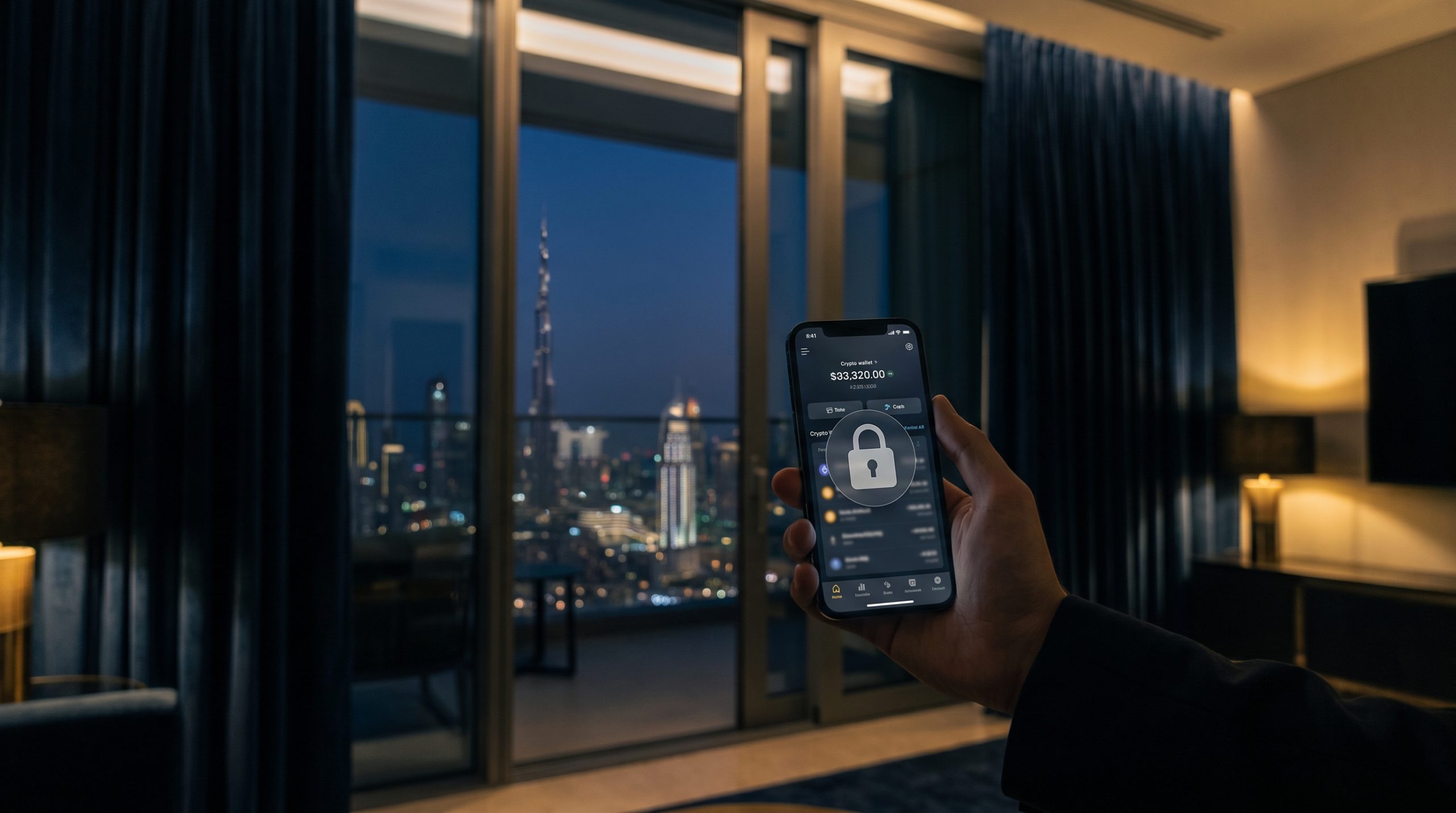
Binance launched “Withdraw Protection” on 4 May 2026. Users can freeze outgoing transfers from their accounts for up to seven days – a digital brake designed to neutralise coerced transactions. The exchange points to hard numbers driving the decision: 316 kidnap-and-ransom incidents against crypto holders since 2014, 79 ransom attacks in 2025 alone, and at least 27 confirmed cases already in the first months of 2026. Physical coercion incidents rose 75% year-on-year, per CertiK.
France recorded 47 crypto wrench attacks in 2026 before May. Eighty-eight suspects have been charged, including minors. Early February, the Binance France president’s home was invaded – attackers arriving at 4 AM, looking for digital assets. He wasn’t there. Others aren’t so fortunate.
Meaningful step. Digital response to a physical problem.
The Attack Surface Binance can’t Reach
A withdrawal lock works when an attacker doesn’t yet have physical control of the target. Slowing the window between coercion and transaction matters.
None of it matters when the attacker is already in the room.
“Hacker bypasses 2FA” isn’t the 2026 threat model. Armed individuals with detailed target intelligence forcing transfers under duress – that’s the threat model. In those scenarios, the victim is the authentication mechanism. If the withdrawal lock can be bypassed with “two strong verification methods” – and the attacker controls the victim – then the attacker controls the bypass.
Binance acknowledges this directly in their product documentation: ordinary staff can’t override an active lock, but the account holder can disable it early given the right verification steps. Under coercion, those verification steps become the attacker’s to-do list.
Why Crypto Holders in Dubai Are High-Priority Targets
Dubai’s position as a crypto hub has increased the physical risk profile of everyone operating here. Founders, traders, fund managers, and UHNWI who relocated for regulatory clarity and favourable tax treatment have also concentrated wealth into a visible, identifiable community.
Attackers follow wealth migration. That same open information environment that makes Dubai attractive – public company registrations, event speaker lists, social media presence, hotel appearances – provides targeting material for criminal networks operating far outside UAE jurisdiction.
Three factors converge here:
Visible wealth signals. Property purchases, vehicle registrations, and conference appearances are traceable and publicly linked to identifiable individuals.
Social proximity. Dubai’s high-net-worth community is concentrated and socially permeable. A single social engineering contact inside a network can yield target packages for multiple subjects.
Jurisdictional friction for attackers. Paradoxically, Dubai’s strong law enforcement deters domestic criminal activity but not internationally-mobile criminal groups who plan, execute, and exit across borders quickly.
What a Physical Security Layer Actually Looks Like
Responding to a surge in physical coercion attacks requires a physical security programme. That starts with threat assessment, not product activation.
Personal exposure audit. What information is publicly accessible about your schedule, residence, vehicles, and family? Not about paranoia – about closing unnecessary attack surface. Conference speaker bios, LinkedIn, and property records frequently contain more than subjects realise.
Residential hardening. A home invasion was the Binance France incident. Most residential properties occupied by HNWIs in Dubai haven’t been assessed for physical security vulnerabilities. Access control, lighting, CCTV placement, and staff vetting are starting points, not complete answers.
Route and pattern security. Surveillance operations precede physical attack operations. Predictable routes – gym, school run, regular restaurant bookings – provide the observation opportunity attackers need to plan an intercept.
Vetted close protection support. For individuals with confirmed elevated risk profiles, whether due to public visibility, asset size, or family exposure, close protection isn’t a luxury product. Risk transfer is what it is. The protection operator absorbs the physical confrontation that the digital lock can’t prevent.
Counter-surveillance awareness. Professional close protection in Dubai incorporates surveillance detection routes and counter-surveillance as standard operating procedure. Identifying hostile interest before a threat materialises is the goal – not responding after it does.
Digital Tools vs. Physical Threats
Hardware wallets, multi-sig setups, withdrawal locks, cold storage – these address online attack vectors. Necessary. None of them survive contact with a determined physical threat.
Multiple outlets reported this same week that Binance’s tool doesn’t protect against “rubber hose cryptanalysis” – the informal term for coercion-based credential extraction. Security professionals have used that term for decades. The underlying concept predates cryptocurrency.
Physical security posture is what protects against physical coercion: reduced exposure, surveillance awareness, hardened residential and transport environments, and – where warranted – professional close protection. No app ships that.
What This Means for Crypto Professionals Operating in Dubai
Holding, managing, or being publicly associated with significant digital assets means this week’s news is an operational signal, not background reading.
Review your public footprint. Assess residential access controls. Consider whether your current schedule predictability creates an observable pattern. Ask whether your risk profile has changed as you’ve become more visible in the Dubai market.
Binance built a useful tool. Use it. Doesn’t replace a physical security review.
At Almas Aman, we work with crypto founders, fund managers, and digital asset holders operating in the UAE who need a practical, discreet physical security capability. If the Binance news prompted a concern you haven’t been able to fully articulate, that concern is worth a conversation.
Contact us at almasaman.com to discuss a confidential security assessment.