SIRA compliance is not optional for CCTV maintenance in Dubai
Every CCTV system in Dubai, whether in a mall, a warehouse, a residential tower, or a private villa, falls under the regulatory authority of the Security Industry Regulatory Agency (SIRA. If your maintenance provider is not SIRA-certified, your system is non-compliant, and non-compliance carries real operational consequences. Insurance claims can be contested, licensing renewals can stall, and footage may fail to satisfy law enforcement requirements during an investigation. Dubai Police approval and adherence to SIRA technical standards are mandatory, not aspirational.
This briefing sets out what SIRA certification actually requires, what it covers, and how to audit your current maintenance arrangement. Read it before your next contract renewal.
What SIRA certification actually verifies
SIRA certification is an official licence and authorisation granted to a company to sell, install, maintain, and upgrade security and surveillance systems in Dubai. Certification is not a one-time badge. It attests to three things: the training of the company’s technicians, the company’s compliance with local safety and quality standards, and the compliance of its internal processes.
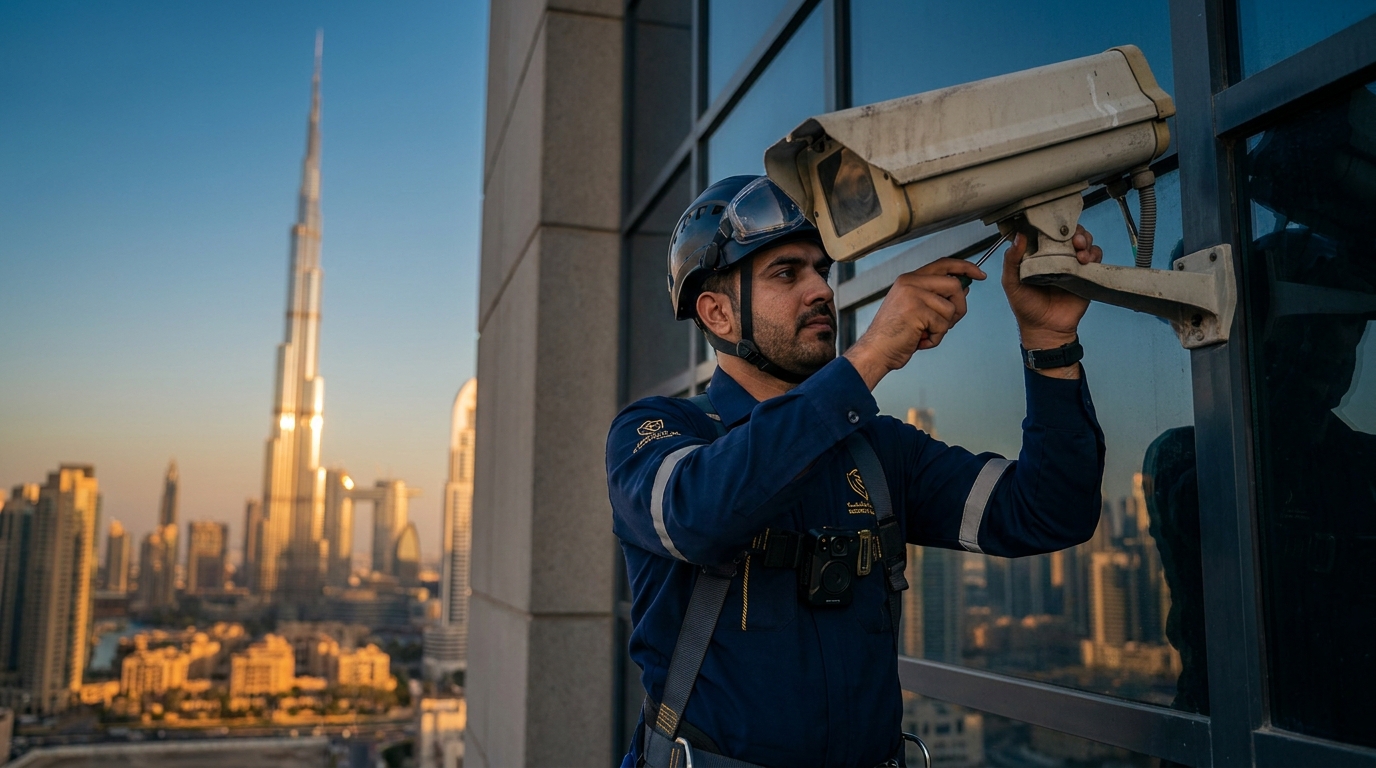
There is a critical distinction most property owners miss. Company-level certification and technician-level certification are separate matters. A genuine SIRA-approved CCTV company in Dubai ensures every technician on its team holds individual SIRA certification, not just the firm. When you engage a maintenance contractor, ask to see the individual credentials of the technicians who will actually attend your site. A company licence with uncertified field staff leaves you exposed.
SIRA-certified firms provide installation, maintenance, and training services. This breadth matters because maintenance decisions cannot be separated from the original design and deployment decisions. A contractor who did not design the system, or who does not understand SIRA’s technical framework, will maintain it to a lower standard.
The technical standards your maintenance contract must uphold
SIRA’s technical standards address four measurable dimensions of a CCTV system: camera resolution, recording quality, coverage, and data encryption. Any maintenance programme that does not actively test and preserve these four dimensions is not protecting your compliance position.
Camera resolution degrades in practice, not on paper. Lenses accumulate dust and film in Dubai’s climate, housings degrade under heat, and repositioned cameras open coverage gaps. Recording quality depends on the health of storage infrastructure: hard drive failures, corrupted footage, and overwritten retention buffers are routine findings in poorly maintained systems. Coverage audits confirm that blind spots have not emerged as your site layout changes. Data encryption protects footage integrity, which directly affects its reliability for law enforcement investigation.
This last point deserves emphasis. The reliability of your footage for law enforcement investigation is the core function of a compliant system. A camera that records but produces footage unusable in an investigation has failed its purpose. Your maintenance contract must include verification that recorded footage remains retrievable, timestamped accurately, and stored to SIRA retention requirements.
A properly structured Annual Maintenance Contract (AMC) covers all of this through proactive, scheduled intervention rather than reactive call-outs. At Almas Aman, we deploy SIRA-compliant CCTV maintenance through structured AMCs designed to protect commercial properties against exactly these failure modes. You can review the full scope of our services to see how maintenance, monitoring, and response integrate.
How to audit your current maintenance arrangement in five checks
Run this audit on your existing contract before renewal. It takes one afternoon and can surface serious gaps.
First, verify the contractor’s SIRA company licence is current, not historical. Ask for the licence number and confirm it is active. Second, request the individual SIRA certifications of the technicians assigned to your account. Third, review whether your maintenance schedule includes periodic testing of resolution, recording quality, coverage, and encryption, or whether it only responds to faults. Fourth, check whether your contractor handles SPC approval and regulatory documentation when systems are modified or expanded. A certified provider manages system design, SPC approval, deployment, and round-the-year support as a continuous chain of responsibility. Fifth, confirm response times and escalation procedures in writing. A maintenance contract without defined response commitments is a promise, not a plan.
If your current provider fails two or more of these checks, treat the contract as a liability. Contact our team and we will conduct a compliance assessment of your system against SIRA standards.
Regional variations: Dubai is not Abu Dhabi
If you operate across emirates, recognise that requirements differ. In Abu Dhabi, CCTV installations require MCC approval, where MCC stands for the Monitoring and Control Centre. A contractor certified for Dubai does not automatically hold Abu Dhabi authorisation. Multi-site operators should confirm that their security provider holds the correct certification for each emirate in which they operate. Assuming reciprocity between emirates is a common and costly error.
Why non-compliance surfaces at the worst possible moment
Compliance failures rarely announce themselves. They surface during an incident, when footage is requested by Dubai Police and cannot be produced, or during a licence renewal, when an inspector finds the system was maintained by an uncertified party. By then the corrective costs are higher and the exposure is already realised. The disciplined approach is preventive: certified maintenance, scheduled verification, documented compliance.
This is also a procurement discipline. When evaluating suppliers, disregard marketing language and request three documents: the SIRA company licence, technician certifications, and a sample maintenance report showing tested parameters. A contractor who cannot produce these quickly is telling you something. For a direct assessment of your position, contact Almas Aman and request a SIRA compliance review of your surveillance estate.
Frequently asked questions
What does it mean for a CCTV company to be SIRA-certified in Dubai?
It means the Security Industry Regulatory Agency has granted the company an official licence and authorisation to sell, install, maintain, and upgrade security and surveillance systems in Dubai. Certification attests to the company’s technicians’ training, its compliance with local safety and quality standards, and the compliance of its processes. Only SIRA-certified firms may lawfully maintain CCTV systems in Dubai.
Is company-level SIRA certification enough, or do technicians need individual certification?
Both are required in practice. A genuine SIRA-approved provider ensures every technician holds individual SIRA certification, not just the company. When auditing a contractor, request the individual credentials of the technicians assigned to your site, not only the corporate licence.
What technical standards must a maintained CCTV system meet in Dubai?
SIRA’s technical standards address camera resolution, recording quality, coverage, and data encryption. All CCTV systems installed in Dubai must meet these standards, because they determine the reliability of the footage for law enforcement investigation. Maintenance programmes must actively test and preserve all four dimensions.
What should a CCTV maintenance contract in Dubai include?
A compliant Annual Maintenance Contract should include scheduled preventive maintenance, periodic testing of resolution, recording quality, coverage, and encryption, verification of footage retrievability, defined response times, and management of SPC approval and regulatory documentation when the system is modified or expanded.
Do CCTV rules differ between Dubai and Abu Dhabi?
Yes. Dubai requires SIRA certification, while installations in Abu Dhabi require MCC approval, where MCC stands for the Monitoring and Control Centre. Multi-site operators must confirm their provider holds the correct certification for each emirate.
What happens if my CCTV system is maintained by a non-certified company?
You lose your compliance position. Footage may be deemed unreliable for law enforcement investigation, insurance claims can be contested, and licensing or approval processes can stall. The corrective costs after an incident far exceed the cost of certified preventive maintenance.