
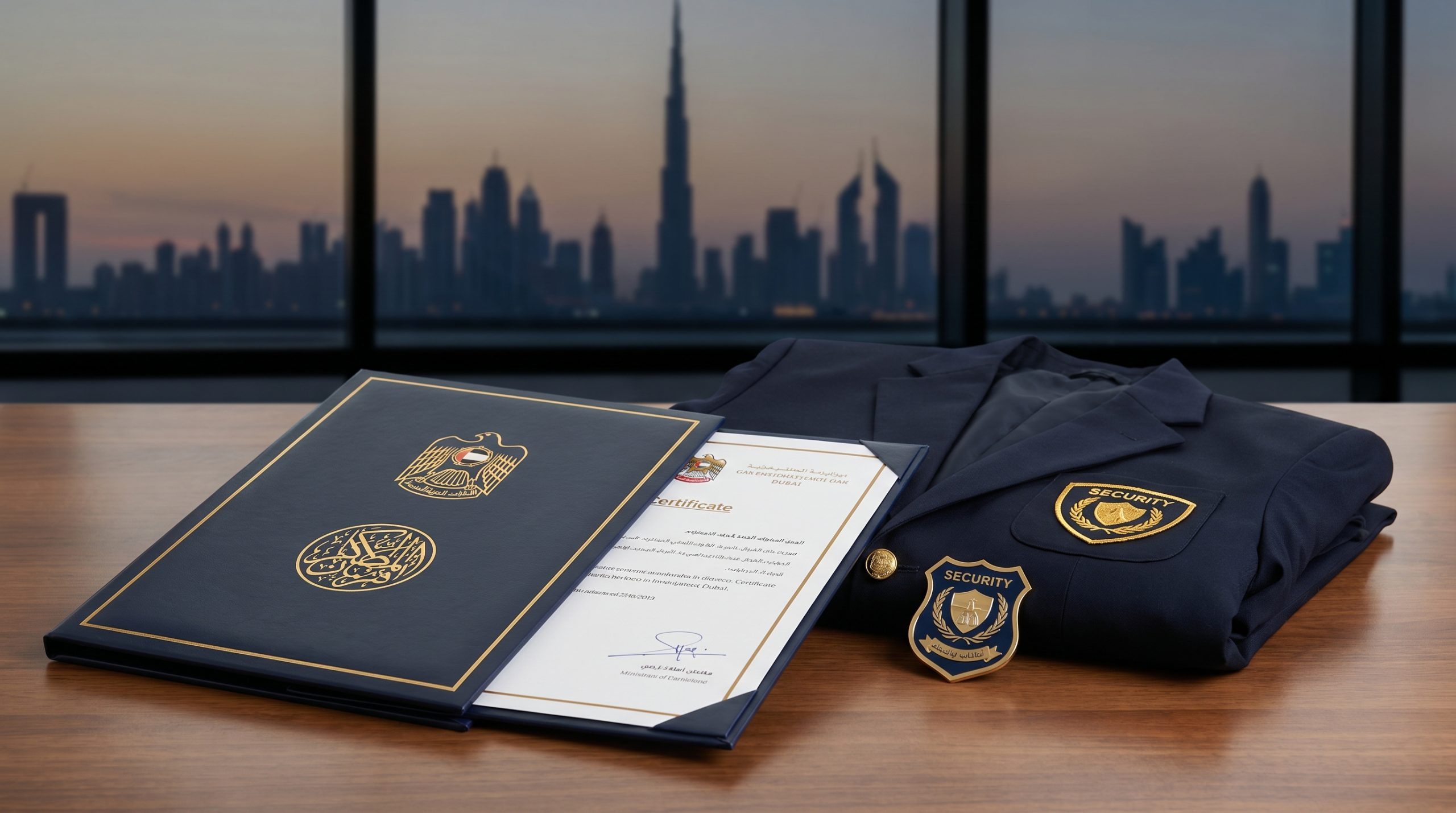
If you’re working in the private security sector in Dubai or planning to enter it, the PSBD certification isn’t optional. It’s the legal baseline. Without it, you can’t operate as a licensed security professional in the UAE. This guide covers what PSBD stands for, how the certification process works, what the exam tests, and what it actually means for your career.
What’s PSBD – Full Form and Mandate
PSBD stands for Private Security Business Division. It’s the regulatory arm within SIRA – the Security Industry Regulatory Agency – responsible for licensing and overseeing private security personnel and companies operating in Dubai and across the UAE.
When people ask for the “PSBD full form,” they’re usually asking because they’ve encountered the requirement in a job listing, a government tender, or during the onboarding process at a security company. The answer is: PSBD is the unit that issues licences to individual security guards, supervisors, and managers operating in the private sector.
All private security professionals in Dubai must hold a valid PSBD-issued licence before they’re legally permitted to work. This isn’t a voluntary credential. It’s a legal requirement enforced by the UAE Ministry of Interior.
Who Needs a PSBD Licence
The following roles require a valid PSBD licence to operate legally in Dubai:
- Security guards (static or mobile patrol)
- Close protection officers
- Security supervisors and team leaders
- Event security personnel
- Cash-in-transit escort officers
- Control room operators for private security operations
If you’re employed by a SIRA-licensed security company and your role involves direct security duties, you’re in scope. There’s no exemption based on contract type, nationality, or years of experience.
The PSBD Certification Process – Step by Step
Step 1: Medical Fitness Clearance
Candidates must obtain a medical fitness certificate from an approved health authority in the UAE. This is a standard physical examination covering vision, hearing, and general fitness for duty. The certificate must be current – typically no older than three months.
Step 2: Security Clearance (No Criminal Record)
A background check is mandatory. International candidates typically provide a police clearance certificate from their country of origin, attested through the relevant embassy. UAE nationals and long-term residents submit through the official Dubai Police process. Any conviction for a violent offence, fraud, or drug-related crime will result in disqualification.
Step 3: SIRA-Registered Training Programme
Candidates must complete an approved SIRA training course delivered by a registered training centre. The training typically runs for five to ten days depending on the level (guard versus supervisor) and covers:
- UAE security laws and regulations
- Use of force and legal authority
- Communication and incident reporting
- Emergency response procedures
- Professionalism and code of conduct
Training must be completed at a SIRA-approved centre. Attendance and assessment records are submitted directly to SIRA.
Step 4: PSBD Exam
Following training, candidates sit the PSBD written exam. The exam is administered in Arabic and English. It assesses knowledge of UAE law relevant to private security, situational judgement, and procedural knowledge from the training curriculum.
Pass mark and question formats vary slightly by level, but candidates should expect scenario-based questions alongside regulatory knowledge questions. The exam isn’t designed to trick candidates – it tests whether they understand the legal and operational system they’ll be operating within.
Candidates who fail may retake the exam. The number of permitted attempts and the waiting period between attempts is defined by SIRA at the time of registration.
Step 5: Licence Issuance via SIRA Portal
Following a successful exam, the candidate’s records are processed and the PSBD licence is issued through the SIRA portal. Licences have a validity period and must be renewed before expiry. Companies are responsible for tracking licence status for all their personnel.
PSBD Exam – What to Prepare For
The exam isn’t difficult if candidates have completed the training curriculum attentively. The areas that trip up unprepared candidates are usually:
UAE-specific legal provisions. Questions about what a security guard is legally permitted to do – and not permitted to do – are common. The use of force system in UAE law is more restrictive than in many other jurisdictions. Candidates with security backgrounds from outside the UAE often over-estimate their legal authority.
Reporting and documentation requirements. Proper incident logging, escalation chains, and notification procedures are tested. Candidates should know when a situation requires escalating to Dubai Police versus when it’s within their authority to manage.
Professional conduct standards. PSBD licences can be suspended or revoked. The exam includes questions about conduct that would trigger regulatory action.
Career Path After PSBD Certification
The PSBD licence is the entry point, not the destination. The UAE private security career path has a clear progression structure:
| Level | Typical Roles | Notes |
|---|---|---|
| Guard Grade | Static security, patrol, access control | Entry level – requires basic PSBD licence |
| Supervisor Grade | Team leader, shift supervisor | Requires additional training and separate examination |
| Manager Grade | Security operations manager, site director | Requires supervisor experience plus management-level certification |
| Close Protection Officer | Executive protection, VIP security | Requires additional specialist training; some companies require international CP credentials alongside PSBD |
Experienced PSBD-licensed professionals with a strong track record in Dubai have access to roles that don’t exist in most markets. The concentration of UHNWI, crypto founders, and senior executives in Dubai – combined with the UAE’s active international events calendar – creates sustained demand for capable security professionals at every level.
What PSBD Certification Tells a Hiring Company
A PSBD licence tells a security company three things: the candidate cleared a government background check, they understand UAE law as it applies to their role, and they’re authorised to operate legally in the emirate. It doesn’t, by itself, demonstrate capability.
This distinction matters. The licence is the legal floor. Capability, character, and performance under pressure are assessed through the hiring process itself. Companies operating at the premium end of the market – executive protection, close protection for UHNWI and crypto principals – select from PSBD-licensed candidates and then apply their own screening above that baseline.
For candidates targeting close protection roles rather than static guard positions, the PSBD licence should be accompanied by a relevant close protection or executive protection qualification. Internationally recognised programmes (Hostile Environment and Close Protection Operations, or similar) signal a higher level of operational readiness to specialist companies.
Renewing Your PSBD Licence
PSBD licences aren’t indefinite. The renewal cycle requires the holder to demonstrate continued compliance, which may include refresher training depending on the renewal period and any regulatory changes since initial certification.
Security companies in Dubai are required to maintain current licence records for all personnel and notify SIRA of any changes in employment status. Operating with expired licences – whether at the individual or company level – is a regulatory violation.
The SIRA portal provides automated renewal notifications. Companies serious about compliance don’t rely on notifications alone; they run internal licence management systems that flag upcoming expirations at 60 and 30 days.
How Almas Aman Approaches Licensing and Compliance
At Almas Aman, all operational personnel are PSBD-licensed as a minimum requirement. For executive protection assignments, we require additional specialist qualifications above and beyond the PSBD baseline. Compliance isn’t a back-office function – it’s integrated into operational readiness.
If you’re building a security career in Dubai, get your PSBD certification first. If you’re a business evaluating a security provider, ask for current licence documentation before any conversation about capability begins.
Licence status is verifiable. If a company can’t produce current PSBD records for its personnel, that tells you everything you need to know.
To discuss executive protection or close protection requirements in Dubai, contact Almas Aman directly. We work with principals who expect regulatory compliance, operational capability, and discretion – not just a tick in a licensing box.