
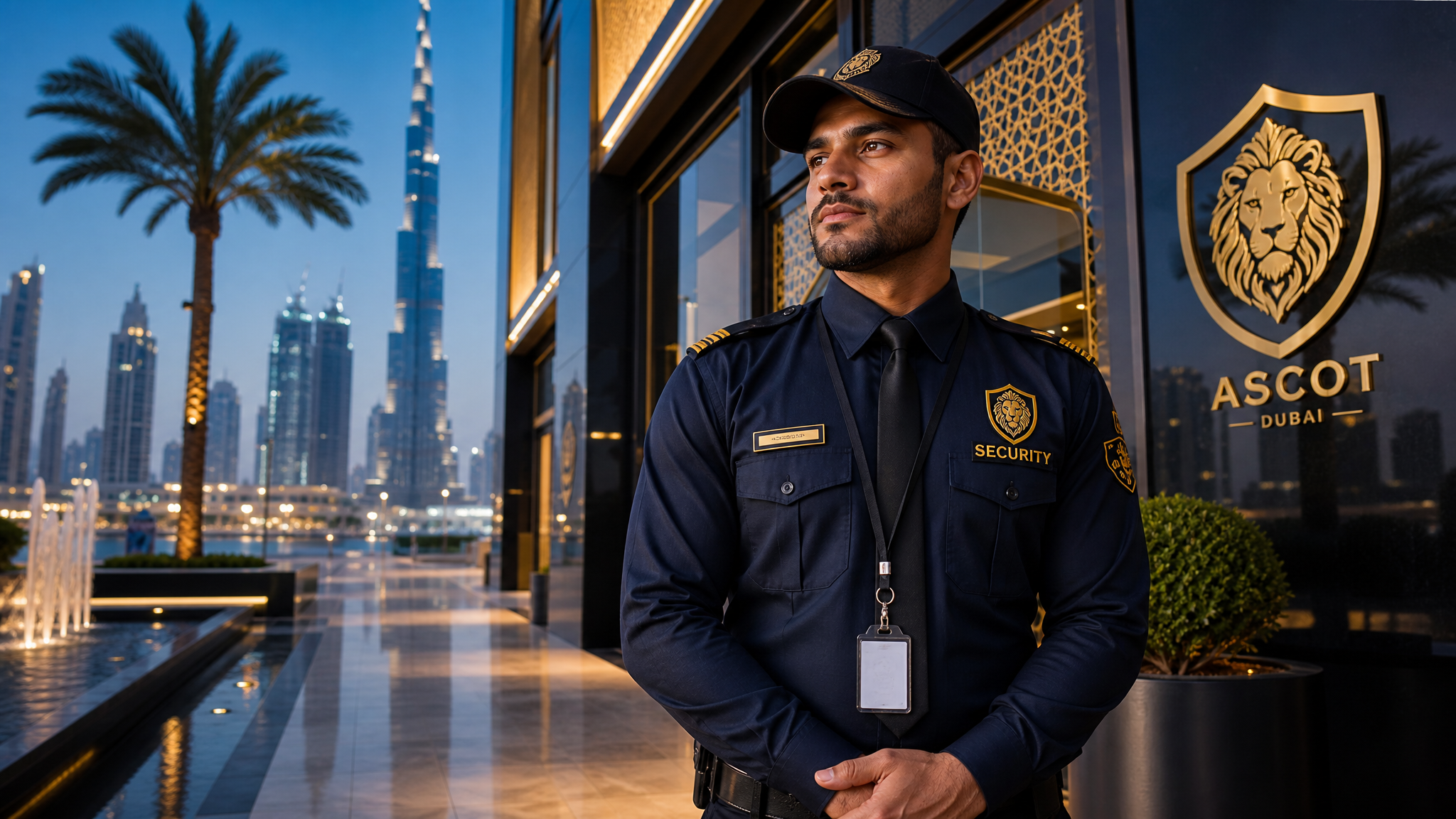
The UAE security market has matured significantly over the past five years. With SIRA tightening its regulatory grip, PSBD certification becoming a baseline requirement, and client due diligence increasing, choosing a security guard company in the UAE is no longer a commodity procurement decision. It’s a risk management decision with legal, operational, and reputational consequences.
We have worked alongside dozens of security providers across Dubai, Abu Dhabi, and the Northern Emirates. This guide breaks down what actually matters when selecting a security guard company in the UAE — the criteria most procurement teams overlook.
The Regulatory Landscape — Why It Matters
Every security guard company operating in the UAE must be licensed by the Security Industry Regulatory Agency (SIRA) in Dubai or the relevant emirate’s authority. This isn’t optional, and it isn’t a rubber stamp.
SIRA mandates that all security personnel complete mandatory training through an approved SIRA training centre, pass background checks, and hold valid PSBD certification. Companies that cut corners on compliance expose their clients to liability.
When evaluating a provider, verify:
- SIRA license validity — Ask for the license number and verify it through the SIRA portal. Don’t take a PDF at face value.
- PSBD certification compliance — Confirm that guards on site hold current PSBD full form certifications, not expired or third-party credentials.
- Training centre accreditation — The provider’s training personnel should come from accredited SIRA training centres, not in-house programs without regulatory backing.
If a provider hesitates on any of these checks, move on.
Company Size and Scale
The UAE security market is fragmented. You have large multinationals like G4S, Transguard, and Magnum Security alongside dozens of mid-tier and boutique firms. Size isn’t inherently better, but scale matters for certain use cases.
When to prefer large providers:
- Multi-site contracts across different emirates
- 24/7 operations with shift coverage requirements
- Need for integrated security systems (CCTV, access control, guard tour monitoring)
- Contracts requiring rapid ramp-up of personnel
When a mid-tier or boutique firm works better:
- Single-site or small-team requirements
- Need for specialised guards (female bodyguards, Arabic-speaking personnel, technical backgrounds)
- Executive protection or VIP security where consistency matters over volume
- Situations requiring direct access to ownership or senior management
Mid-tier providers often deliver better service quality on smaller contracts because their principal-to-guard ratio is stronger. Large firms can treat small contracts as an afterthought.
Guard Quality and Training Standards
The single biggest differentiator between security guard companies in the UAE is the quality of the guards on the ground. Marketing materials don’t tell you this.
What to inspect during evaluation:
Interview process. Reputable providers psychometrically screen candidates. Ask about their rejection rate. If they claim they never reject applicants, that’s a red flag.
Training pipeline. Beyond mandatory SIRA training, does the provider run scenario-based training? Active shooter drills? De-escalation techniques? Fire warden training? The baseline SIRA curriculum covers fundamentals. The best providers go significantly further.
Language proficiency. English proficiency is non-negotiable for most client-facing roles in Dubai. Guards should be able to write incident reports in clear English, not just speak basic phrases.
Background verification. SIRA mandates criminal record checks, but a thorough provider runs additional checks — previous employment verification, credit checks for roles involving asset protection, and reference calls with past clients.
Technology Integration
Modern security guard companies in the UAE are technology-enabled. Paper logbooks and clipboard patrols are becoming obsolete.
Minimum technology requirements:
- Guard tour systems with GPS-tracked checkpoints and digital reporting
- Real-time incident reporting via mobile app or dashboard
- CCTV integration where guards can monitor and respond to camera alerts
- Automated attendance and shift management (not WhatsApp rosters)
Differentiators:
- AI-powered video analytics integrated with guard response protocols
- Biometric access control systems managed through a single platform
- Client dashboards showing real-time guard locations, incident reports, and compliance metrics
When we audit security operations, the gap between providers with and without technology integration is stark. The former catch incidents in real time. The latter find out about them in the morning shift handover.
Pricing — What You Should and Shouldn’t Accept
Security guard pricing in the UAE varies significantly based on guard type, shift duration, and contract terms.
Typical pricing ranges (per guard, per 12-hour shift, 2026):
| Guard Type | Price Range (AED) |
|---|---|
| Unarmed security guard | 4,500 — 6,500 |
| Armed security guard | 7,000 — 10,000 |
| PSBD-certified guard | 5,500 — 7,500 |
| Female security guard | 5,000 — 7,000 |
| VIP / close protection officer | 12,000 — 20,000 |
Red flags in pricing:
- Prices significantly below market average — often means underpaid guards, inadequate training, or compliance shortcuts
- Contracts that don’t include visa, accommodation, transportation, and insurance costs (these are mandatory under UAE labour law)
- Pricing that doesn’t account for overtime, public holiday rates, or shift differentials
If a quote is 30% below competitors, there’s a reason. That reason will become your problem when an incident occurs.
Contracts and Service Level Agreements
The SLA is the most important document in your relationship with a security guard company. It defines what good performance looks like and what happens when it isn’t met.
Essential SLA terms:
- Guaranteed fill rate. What percentage of shifts must be filled, and what happens when a guard is absent? 98% fill rate or higher is standard.
- Response time. How quickly does the provider replace an absent guard? Four hours or less for unplanned absences.
- Incident reporting timeline. Critical incidents must be reported within 30 minutes. Routine incidents within 24 hours.
- Guard replacement. If a guard underperforms, how quickly can the provider deploy a replacement? 48 hours is reasonable.
- Audit rights. The contract should allow unannounced site visits by your team.
Don’t sign a contract that lacks clear, measurable SLAs with financial penalties for non-compliance.
Red Flags to Watch For
After years of evaluating security providers across the UAE, these are the patterns that predict poor performance:
Mismatch between sales and operations. The sales team promises capabilities the operations team can’t deliver. Ask to meet the operations manager during the evaluation.
High guard turnover. If the provider’s guard turnover exceeds 30% annually, continuity and quality will suffer. Ask for turnover data.
No technology stack. A provider that can’t demonstrate a guard tour system or incident management platform in 2026 is operating at a 2010 standard.
Vague compliance answers. If the provider can’t immediately produce SIRA license details, PSBD training records, and insurance certificates, they aren’t compliant.
No client references. Every legitimate provider has existing clients willing to provide references. Insist on speaking to at least two current clients in similar industries.
Making the Final Decision
Selecting a security guard company in the UAE requires diligence. Don’t rush the process. A bad security provider creates operational risk, legal exposure, and reputational damage. A good one becomes a force multiplier for your safety program.
Decision framework:
- Shortlist three providers based on SIRA compliance and industry experience
- Conduct site visits to their operations centre and request guard interviews
- Verify all licenses and certifications through the SIRA portal
- Review SLAs with legal counsel before signing
- Schedule a 30-day review after contract commencement
If you need assistance evaluating security providers or designing a security program tailored to your operations in the UAE, contact Almas Aman. We provide independent security advisory services — we don’t sell guard services, so our assessments are objective.